Garden & Landscape Development
Tree Plantation, Green Belt & Urban Forests
Green belts that satisfy the consent — and forests that actually grow.
What this service is
In plain terms.
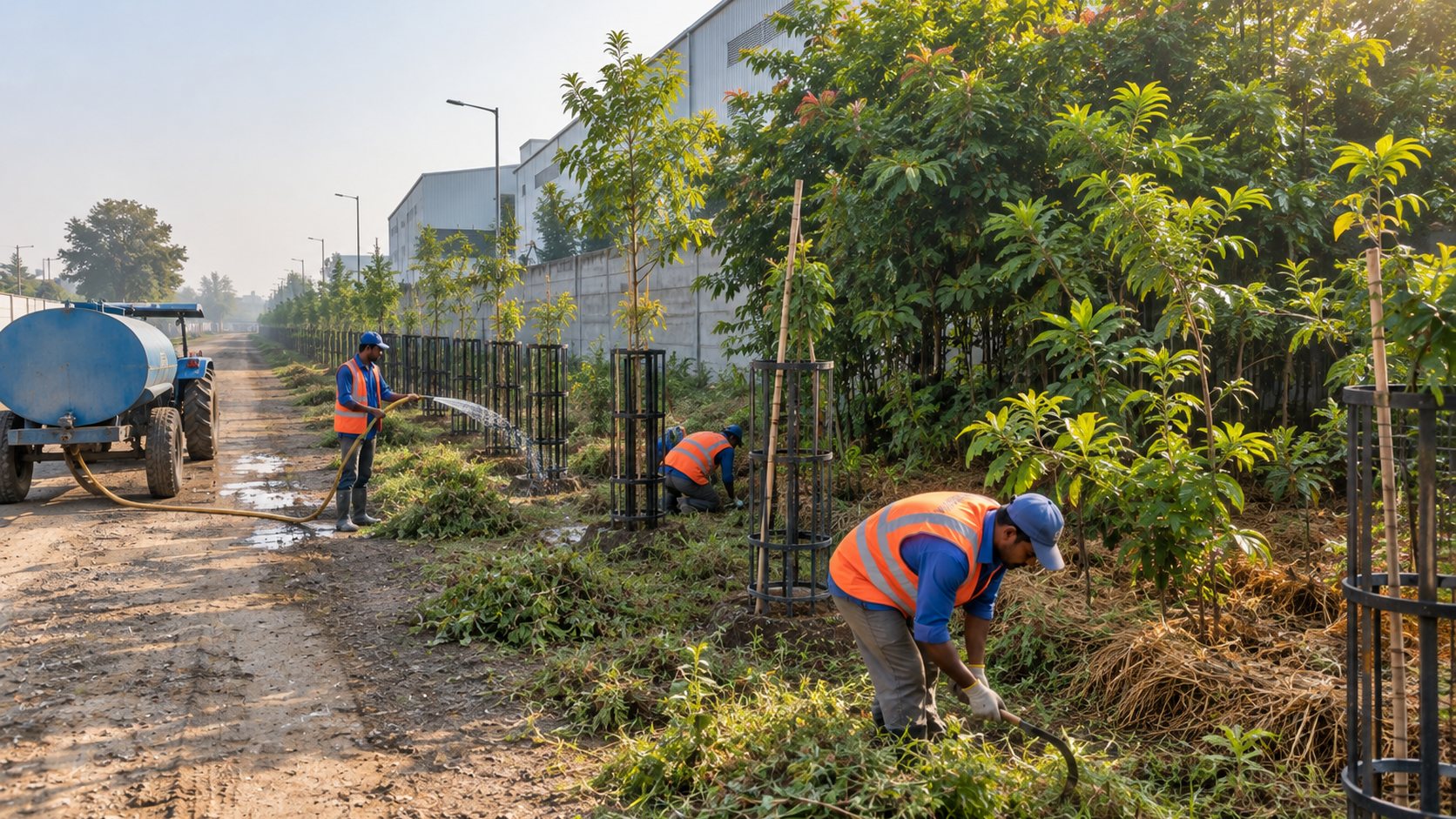
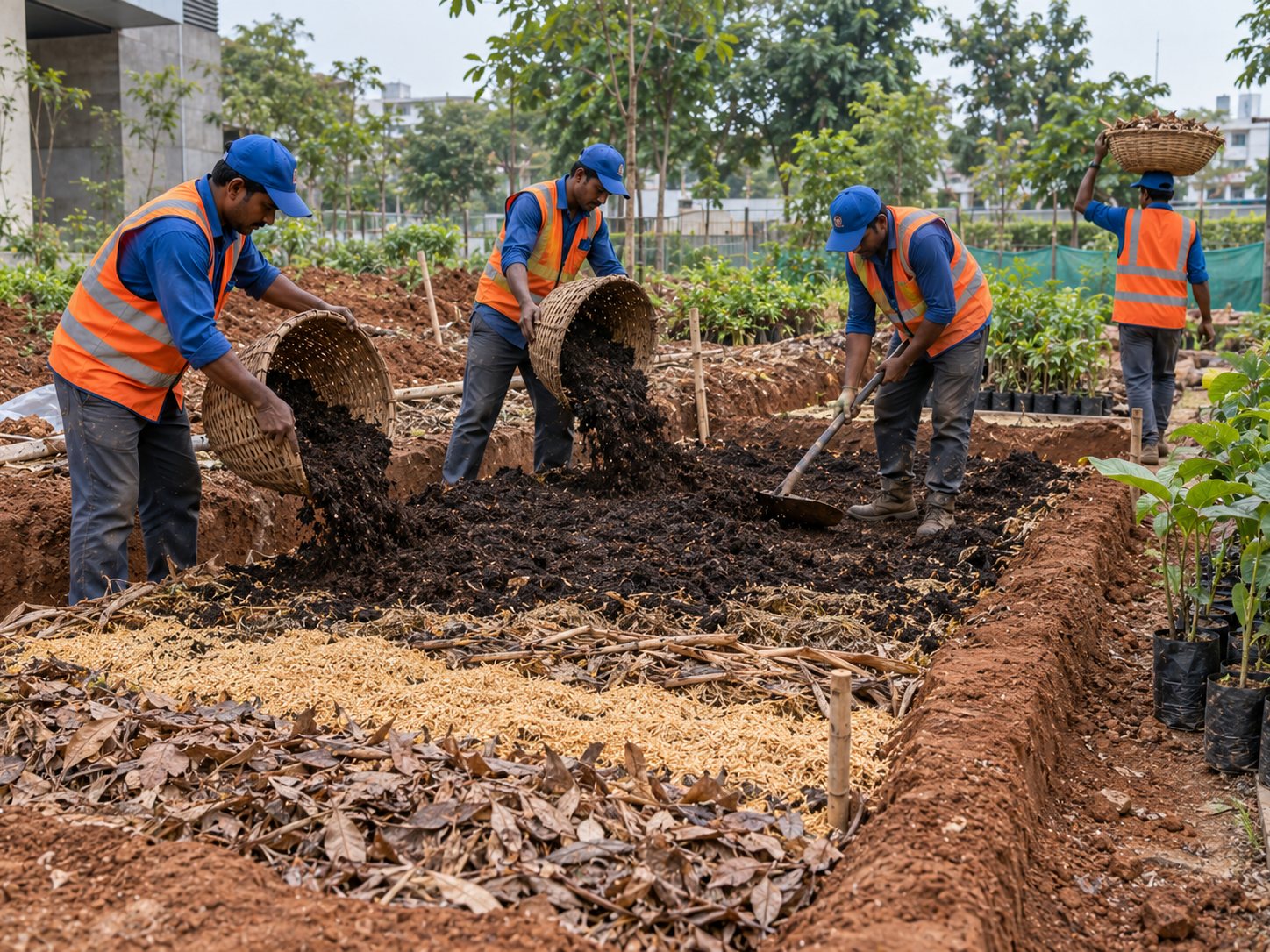
Plantation is easy to announce and hard to deliver: most mass-planting drives lose the majority of their saplings within two years. Real plantation work is the combination of the right native species, correctly prepared pits, protection, watering through the first two dry seasons and honest survival counting. For industries, a green belt is also a regulatory commitment — environmental consents commonly require a defined share of the plot under dense plantation along the boundary. Miyawaki urban forests go further, planting multi-layered native species at high density on enriched soil so that a self-sustaining mini forest forms in two to three years.
Scope of work
What a standard engagement includes. Anything outside this is quoted separately and agreed in writing before it is executed.
How we execute it
From enquiry to handover.
Six defined stages. You always know which one you are in and what closes it.
Site & requirement study
Area, soil, water, the consent condition or CSR goal, and the survival target are fixed before species are chosen.
Species plan
Native, climate-suited species mixed across canopy, sub-canopy, shrub and ground layers — no ornamental-only monocultures.
Ground preparation
Pits dug to size, or the Miyawaki bed excavated and enriched with biomass, compost and soil conditioners.
Plantation
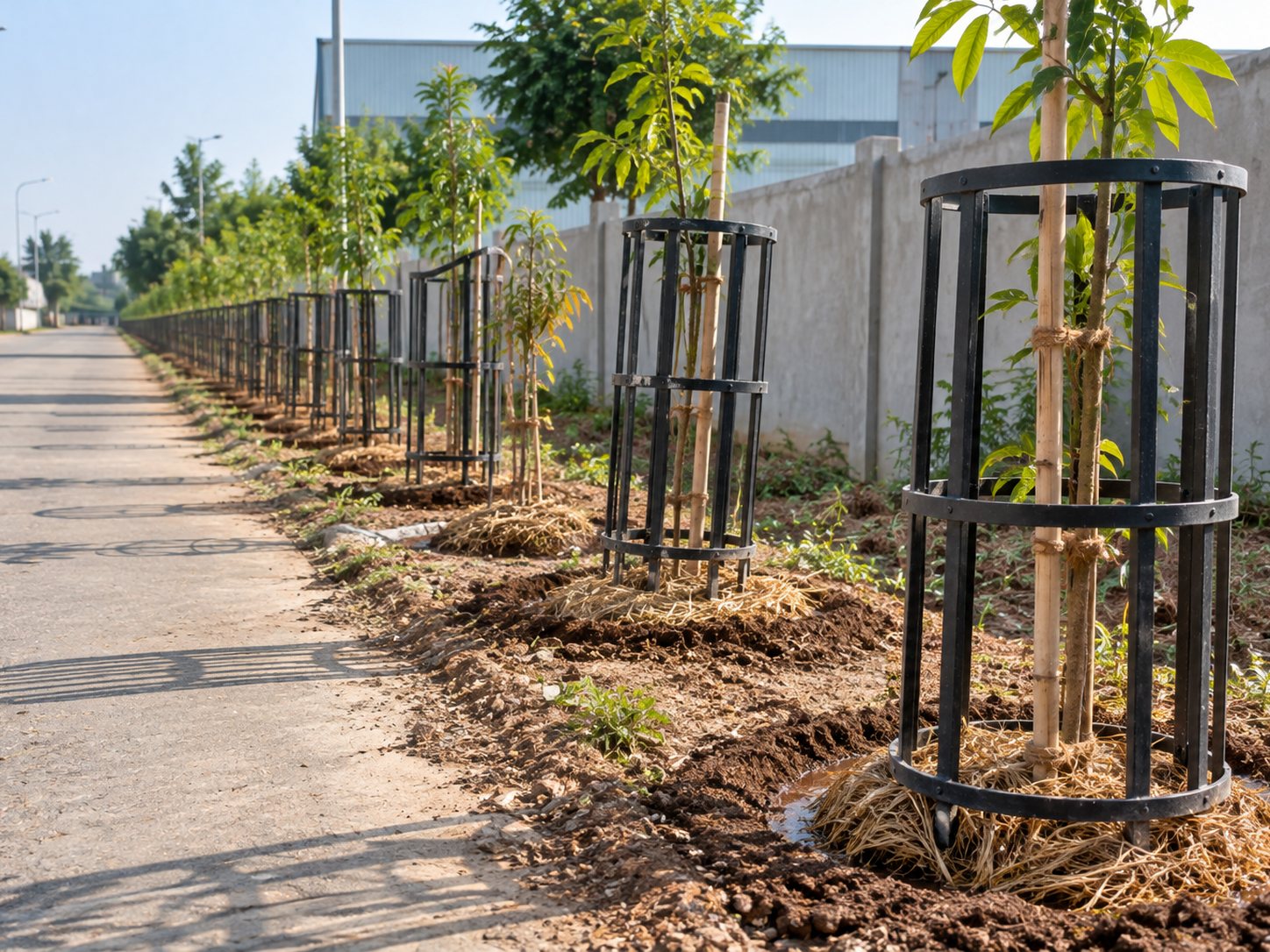
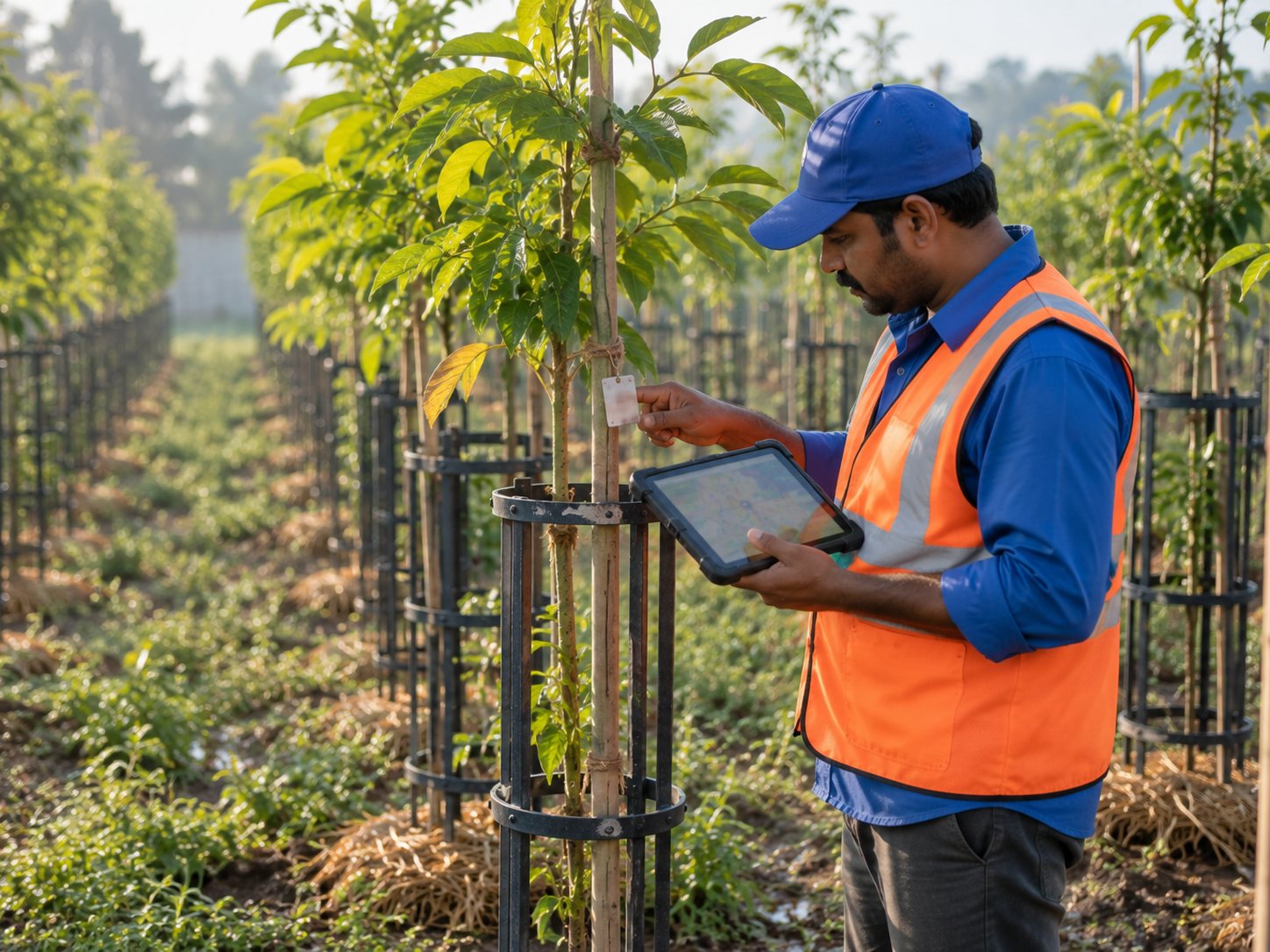
Saplings planted at the designed density, staked, guarded and mulched, with every tree or plot geotagged.
Aftercare
Scheduled watering, weeding, casualty replacement and protection from grazing through the establishment years.
Survival reporting
Periodic geotagged survival counts and photo reports — usable for environmental compliance and ESG disclosures.
Equipment
- Excavators and tractor-mounted augers for pit digging
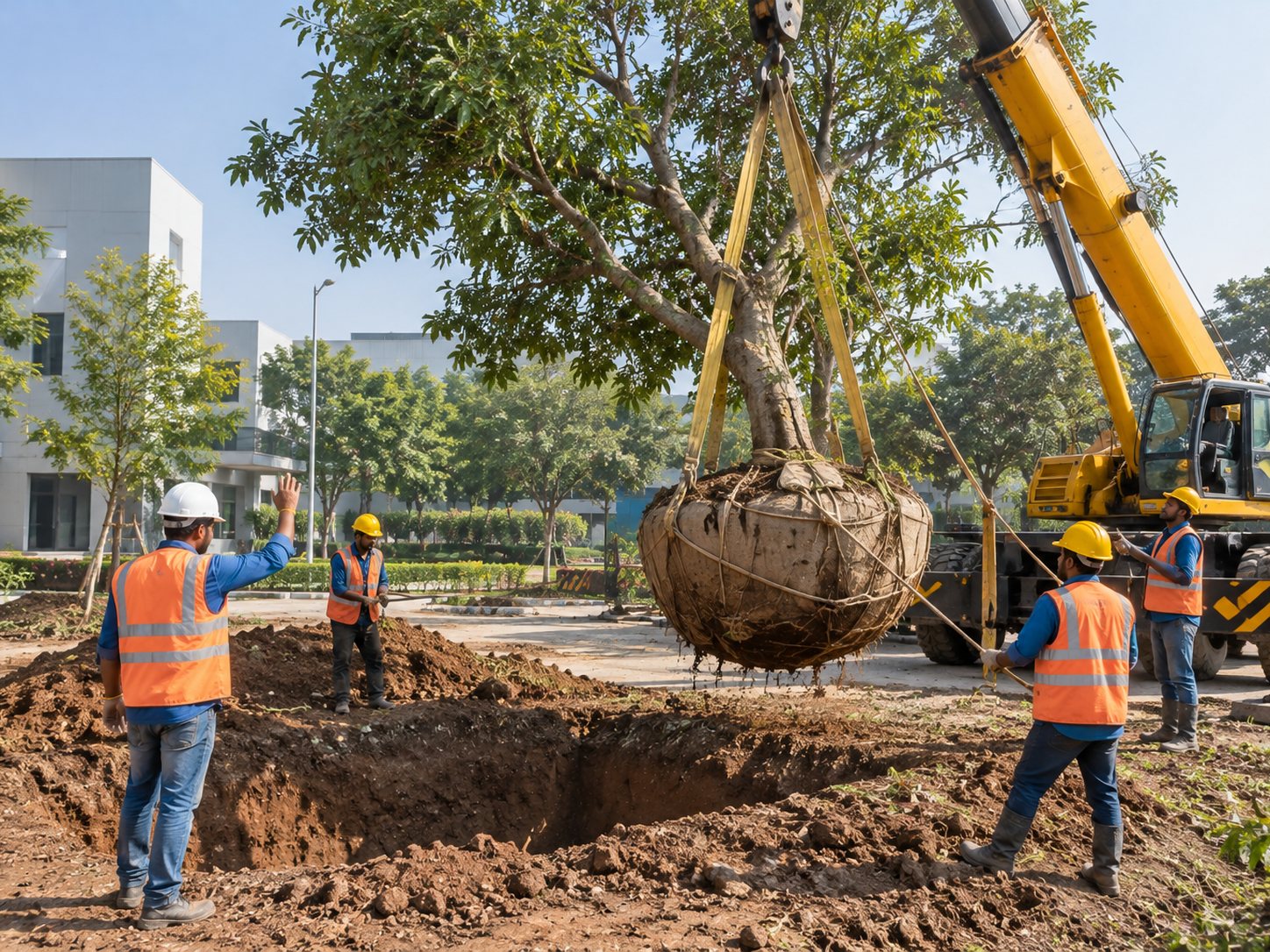
- Tree spades, slings and cranes for large-tree transplantation
- Water tankers and drip systems for aftercare
- Tree guards, stakes and mulch material
- GPS / geotagging devices for survival tracking
Team on the job
- Horticulturist / forestry specialist for species planning
- Plantation supervisor
- Trained plantation and aftercare crew
- Documentation executive for geotagged reporting
Compliance governing this work
- Green belt planned against the plantation condition in your environmental consent
- Native species preference with verified nursery sourcing
- Tree-felling or transplantation permissions coordinated with the local authority where applicable
- Labour Licence, PF and ESIC for every deployed worker
On site
Tree Plantation, Green Belt & Urban Forests in execution.
These slots are reserved for MGP's own site photography of this exact service.
Before you commit
Questions buyers actually ask.
Answered directly, including where the honest answer is a qualification rather than a yes.
A method of planting many native species very densely — typically 3–4 saplings per square metre — on deeply enriched soil, in layers. The saplings compete for light and grow quickly, forming a dense, self-sustaining mini forest within about three years. It suits small urban plots, campus corners and industrial boundaries.
Tree Plantation, Green Belt & Urban Forests across Maharashtra
Need tree plantation, green belt & urban forests?
Send us the site details and the scope you have in mind. If a survey is the sensible first step, we will say so rather than quoting blind.