Safety: a major priority
Safety is a procedure, not a poster.
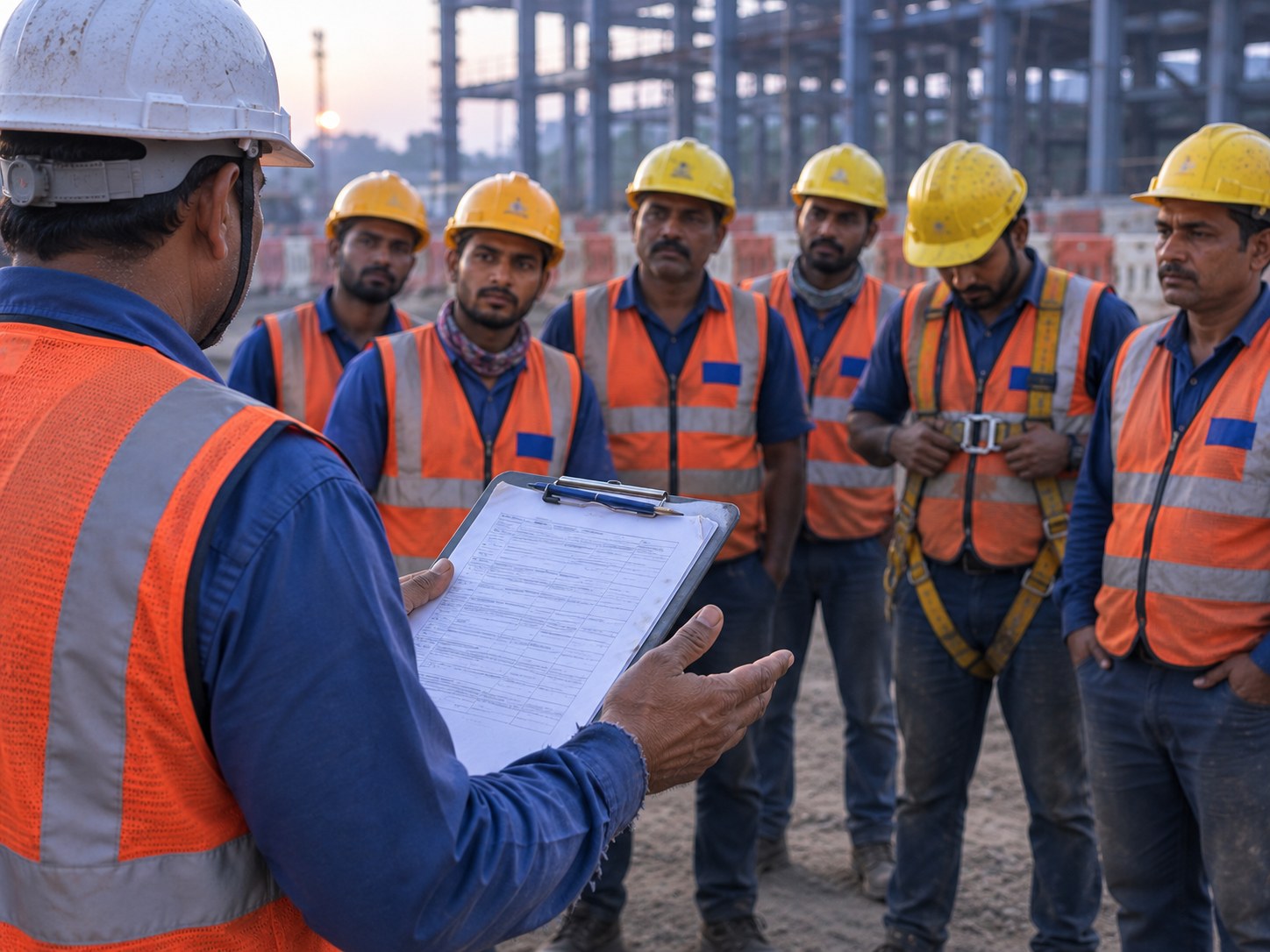
MGP implements stringent safety standards and regular training, conducts drills at work spots, and carries out workplace risk assessment from which the day's measures are drawn. The safety of everyone accessing or passing through the workplace — not only our own people — is the concern.
How it works in practice
Four controls that sit between a crew and an incident.
Risk assessed before mobilisation
Every work spot gets a written risk assessment before a crew reaches it. The day's control measures are drawn from that document, not improvised on arrival. Where site conditions differ from what was assessed, work stops and the assessment is revised.
Toolbox talk before every shift
No shift begins without a briefing covering the day's specific activity, the hazards in it, and each person's role. Attendance at the talk is recorded — a briefing nobody signed is a briefing that did not happen.
PPE issued, logged and enforced
Helmets, full body harnesses with double lanyard, arc-rated clothing for electrical work, and task-appropriate protection issued against a per-worker log. Supervisors have explicit authority to stop work when PPE is not in use.
Permit-to-work for high-risk activity
Work at height, live electrical work, confined space entry, excavation and hot work each proceed only against an issued permit, with lock-out and tag-out applied where energy is involved.
Standing practices
What happens on every MGP site, every day.
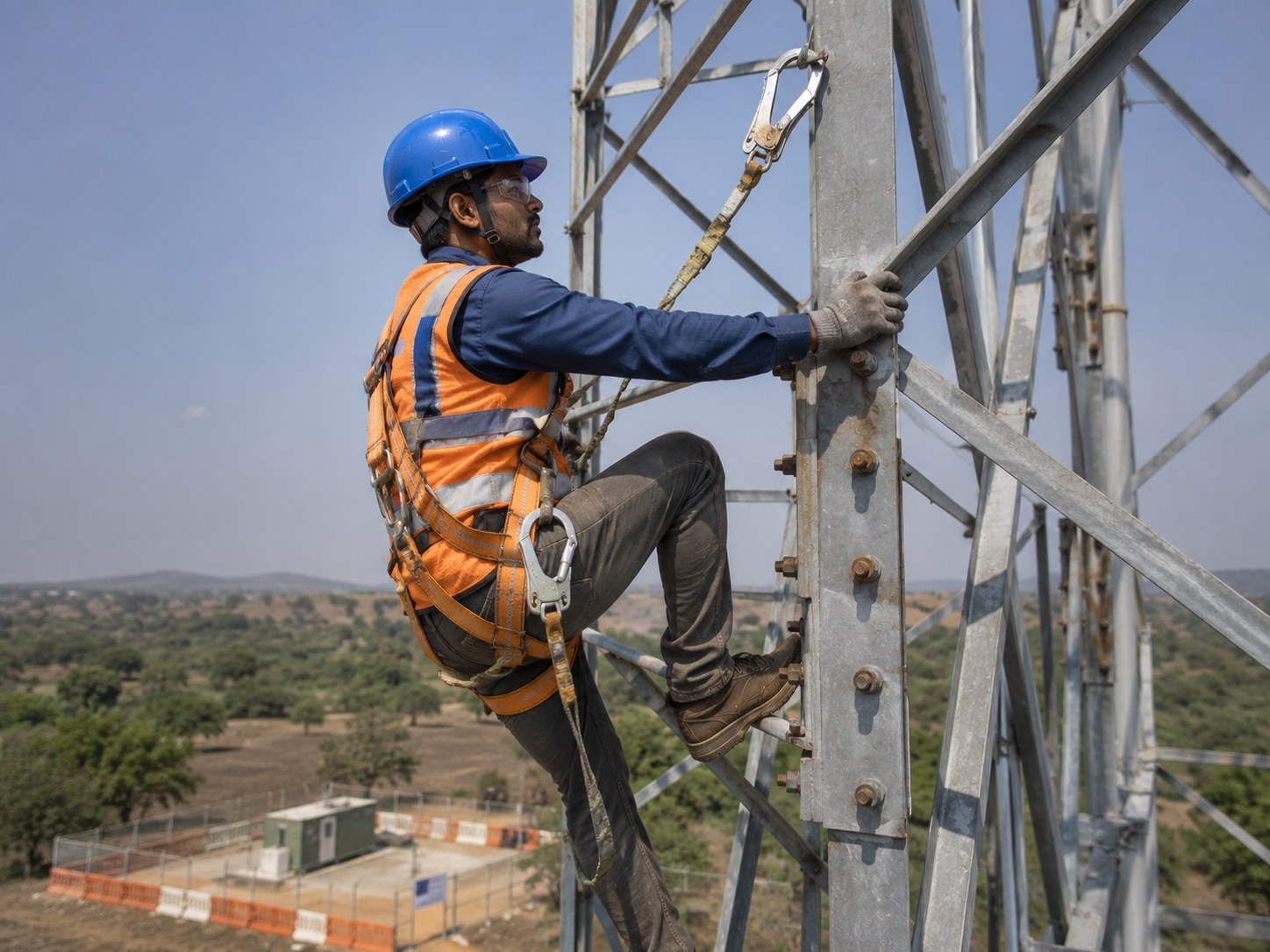
Safety drills at work spots
Conducted regularly at the actual work location, not only in a training room.
Regular employee training
Stringent safety standards and training at regular intervals for every deployed employee.
Inspected lifting tackle
Slings, shackles, chain pulleys and harnesses inspected and tagged; anything untagged is withdrawn.
Third-party access safety
Barricading, signage and traffic management so that the public and client staff passing the work are protected too.
Monthly documented audit
A management safety audit each month per circle or project, with corrective actions tracked to closure.
Incident reporting
Near misses reported and reviewed, not buried. A near miss reported is a serious incident prevented.
Quality
Work is not complete until it can be evidenced.
Across all six verticals the same rule applies: a job closes with documents your engineer can check, not with a phone call saying it is done.
Telecom
Torque records, earth resistance readings, alignment values and geotagged installation photographs.
Civil
Field density tests, concrete cube results, material certificates, layer thickness records and as-built levels.
Electrical
Insulation resistance, earth resistance, transformer ratio, relay settings and statutory inspection clearance.
Fibre
Bidirectional OTDR traces, end-to-end power measurements, splice loss records and marked as-built route maps.
Solar
String test results, insulation and earth checks, waterproofing photographs and generation verification.
Facility
Area-wise checklists, supervisor inspection records, monthly audit scores and statutory compliance challans.
Questions
Safety, answered plainly.
Yes. For any engagement of meaningful scope we submit a site-specific safety plan before mobilisation, covering the risk assessment, permit requirements, PPE standard, emergency arrangements and the named safety responsible person.
Need our safety documentation for pre-qualification?
Safety policy, risk assessment templates, PPE standard and training records — tell us what your HSE team needs and we will send it.